


佛杢online
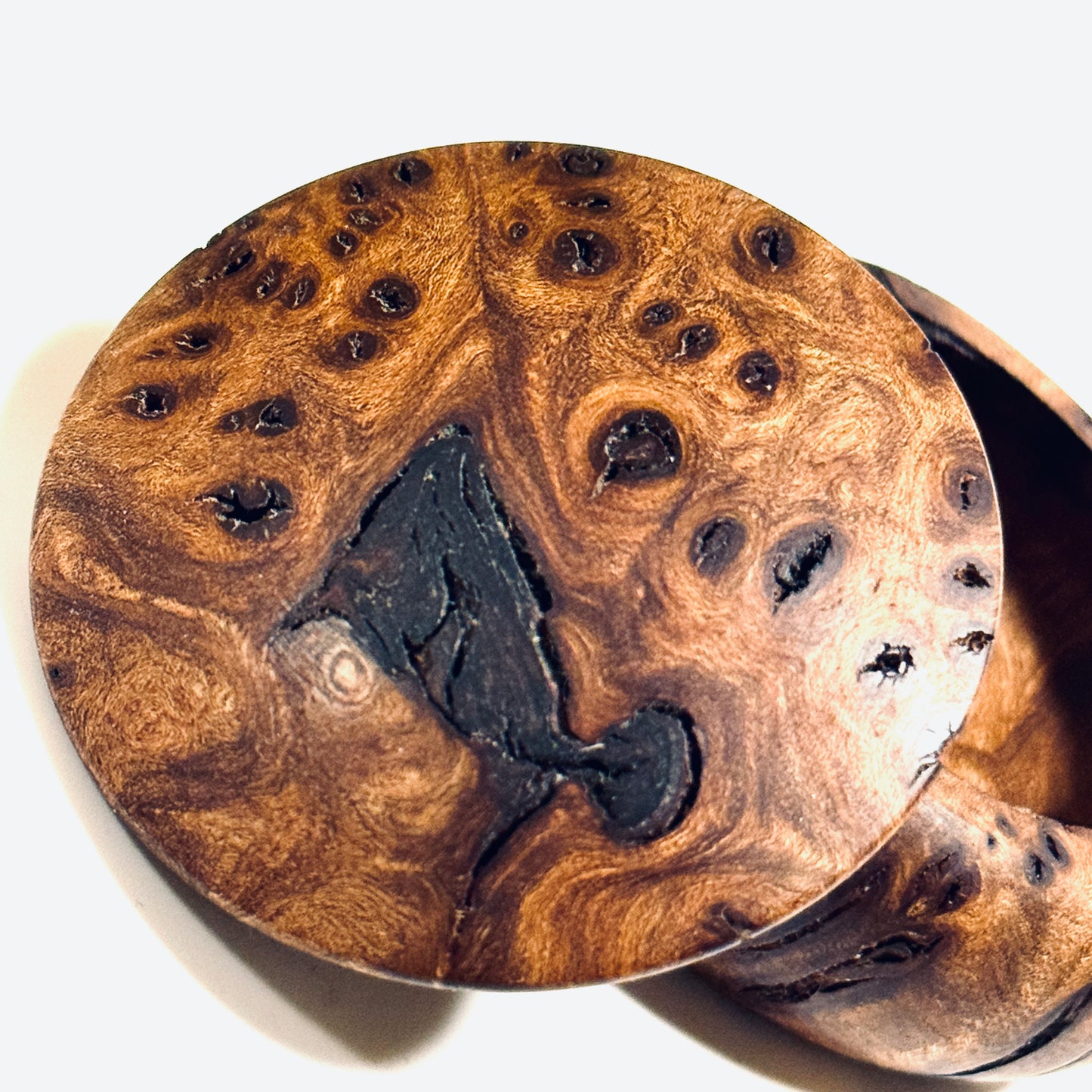
High-quality incense box made of Japanese walnut burl, with knots, 60mm in diameter, bun-shaped, one-touch closure.
High-quality incense box made of Japanese walnut burl, with knots, 60mm in diameter, bun-shaped, one-touch closure.
Couldn't load pickup availability
Japanese walnut burl (Onigurumi)
While walnuts from overseas, such as Claro walnut, are famous and highly popular, it is said that nothing surpasses the fine grain and color of the Japanese walnut, Onigurumi.
While the supply of Japanese walnut burl wood itself is extremely low, high-quality lumber is even rarer.
While there are many types of brown wood, the dark brown color seen in the burl of this Japanese walnut is unique and one of a kind.
The colors are difficult to convey through photographs alone, but this is an item that I would really like you to see in person.
It was once simply called walnut, but when species like the Teuchi walnut and Persian walnut were introduced from abroad, it is said that the Japanese walnut came to be called Onigurumi to distinguish it from them. The name "oni" (demon) comes from the fact that the pattern on the surface of the seed resembles a demon's face, as well as the large size of the fruit and the hardness of the pit.
There are two theories regarding the origin of the word "walnut": one suggests it comes from "Wu no mi," meaning "fruit of Wu," referring to the Persian walnut from China; the other suggests it comes from the fact that the bark was used as a black dye. The raw bark, leaves, and perianth were used to make reddish-brown and dark brown dyes, and documents in the Shōsōin Treasure House refer to the color dyed with the bark as "walnut color."
The trunk is difficult to straighten, and the wood has a beautiful dark brown grain and is easy to process, making it excellent for furniture making. Due to its moderate hardness and weight, it was widely harvested throughout Japan from the Meiji era to the early Showa era as the ideal wood for cannon stocks. The shells of the Japanese walnut fruit are used as a material for studless tires, and the woody part after removing the bark is used for smoking chips.
Share


If the item you want is out of stock
By submitting a request, we will contact you as soon as production is complete. This is not a formal order, so you can cancel if you wish.